
How fast do trees grow?
It depends mostly on the species. Here is how much a young, well-established tree gains each year, from nursery, botanic garden and forestry guides, with its final height. Each species grows at its own pace. When young, a weeping willow gains about 1 m a year, an olive tree 20 cm.
Free, no adverts, no sign-up needed to start. On iPhone, iPad and in your browser; on Android soon.

Growth per year, tree by tree
The trees in our guides whose growth is given by a reliable source.
Fast-growing: 60 cm or more a year
| Tree | Growth per year (young) | Final height |
|---|---|---|
| Black locust | 2 m | 20 m |
| Tasmanian blue gum | 1.65 m | 30 m |
| Goat willow | 1.35 m | 8 m |
| Italian alder | 1.2 m | 15 m |
| Oleaster | 1.2 m | 7 m |
| Coast redwood | 1.05 m | 40 m |
| Japanese cedar | 1.05 m | 15 m |
| Monterey cypress | 1.05 m | 20 m |
| Norway maple | 1 m | 25 m |
| Weeping willow | 1 m | 12 m |
| Dawn redwood | 95 cm | 25 m |
| Giant sequoia | 95 cm | 35 m |
| Pecan | 90 cm | 20 m |
| White mulberry | 90 cm | 10 m |
| Silver maple | 80 cm | 20 m |
| Tulip tree | 80 cm | 25 m |
| White poplar | 80 cm | 25 m |
| Aspen | 75 cm | 20 m |
| Black walnut | 75 cm | 25 m |
| Walnut tree | 75 cm | 20 m |
| Weymouth pine | 75 cm | 25 m |
| Maritime pine | 70 cm | 25 m |
| Almond tree | 65 cm | 6 m |
| Common alder | 65 cm | 20 m |
| Mimosa | 65 cm | 10 m |
| Silver birch | 60 cm | 20 m |
| Turkish hazel | 60 cm | 15 m |
Medium: 30 to 60 cm a year
Slow-growing: under 30 cm a year
| Tree | Growth per year (young) | Final height |
|---|---|---|
| Box elder | 25 cm | 12 m |
| Chusan palm | 25 cm | 10 m |
| Ginkgo | 25 cm | 20 m |
| Holm oak | 25 cm | 15 m |
| Japanese cherry | 25 cm | 6 m |
| Quince tree | 25 cm | 5 m |
| Aleppo pine | 20 cm | 15 m |
| Arolla pine | 20 cm | 12 m |
| Cherry plum | 20 cm | 8 m |
| Colorado blue spruce | 20 cm | 15 m |
| Honey locust | 20 cm | 15 m |
| Korean fir | 20 cm | 10 m |
| Olive tree | 20 cm | 6 m |
| Paperbark maple | 20 cm | 8 m |
| Cedar of Lebanon | 15 cm | 25 m |
| Kousa dogwood | 15 cm | 6 m |
| Stone pine | 15 cm | 20 m |
| Colorado white fir | 10 cm | 20 m |
Most cited sources: NaturaDB, American Conifer Society, Clemson Cooperative Extension, Jardiner Malin, waldwissen.net.
Quick shade for the summer
- Choose a tree from the first list whose final height and spread fit the space.
- Plant it on the side of the afternoon sun: south-west or west of the patio or the house.
- Near the house, prefer a deciduous tree: shade in summer, winter sun once the leaves have fallen.
- Water it for the first summers: a young tree short of water grows little.
What changes how fast a tree grows
- The figures are for a young, well-established tree, in a soil and climate that suit it.
- In the first year after planting, the tree puts down roots and often grows little.
- Growth slows as the tree nears its final height.
- Lack of water, poor or compacted soil and grass at its foot all slow it down.
And in your garden?
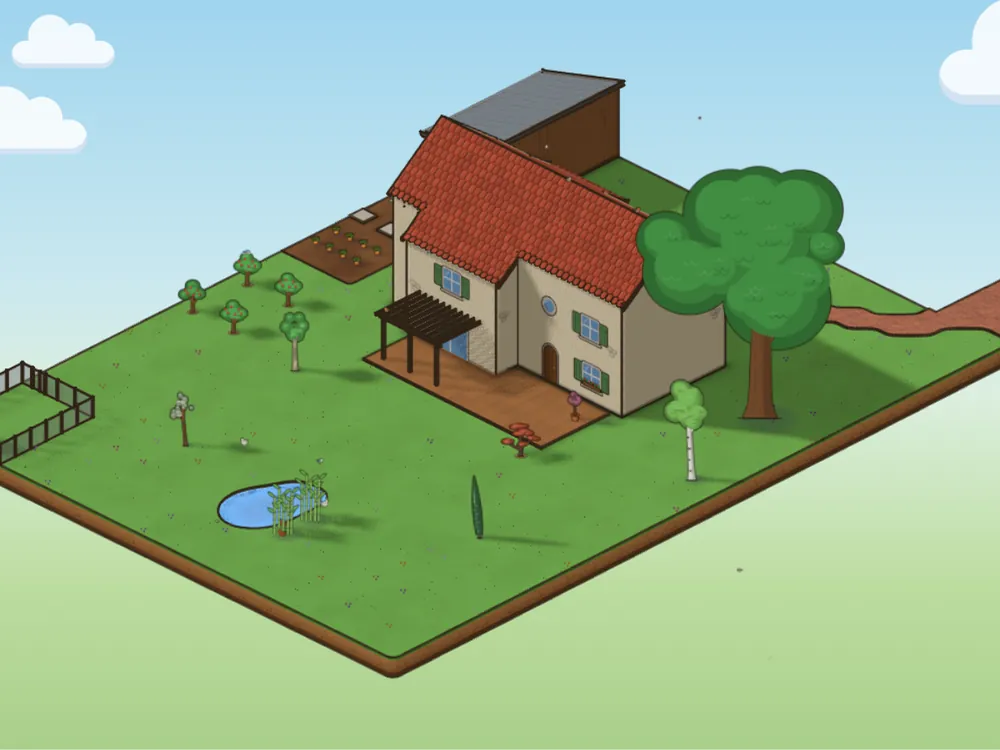
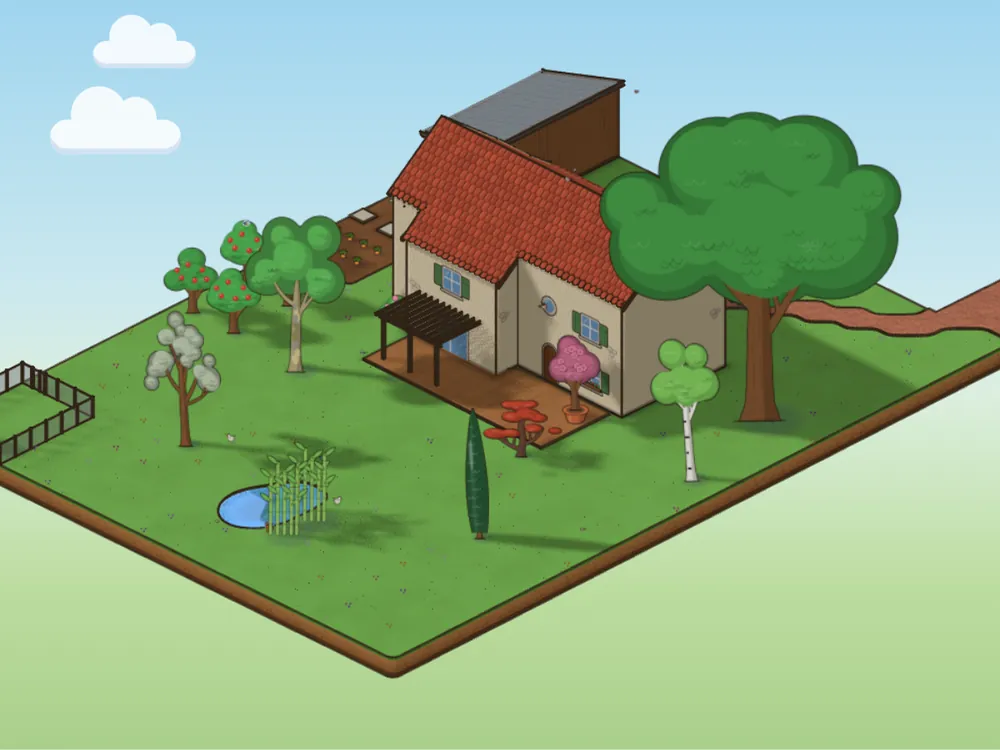
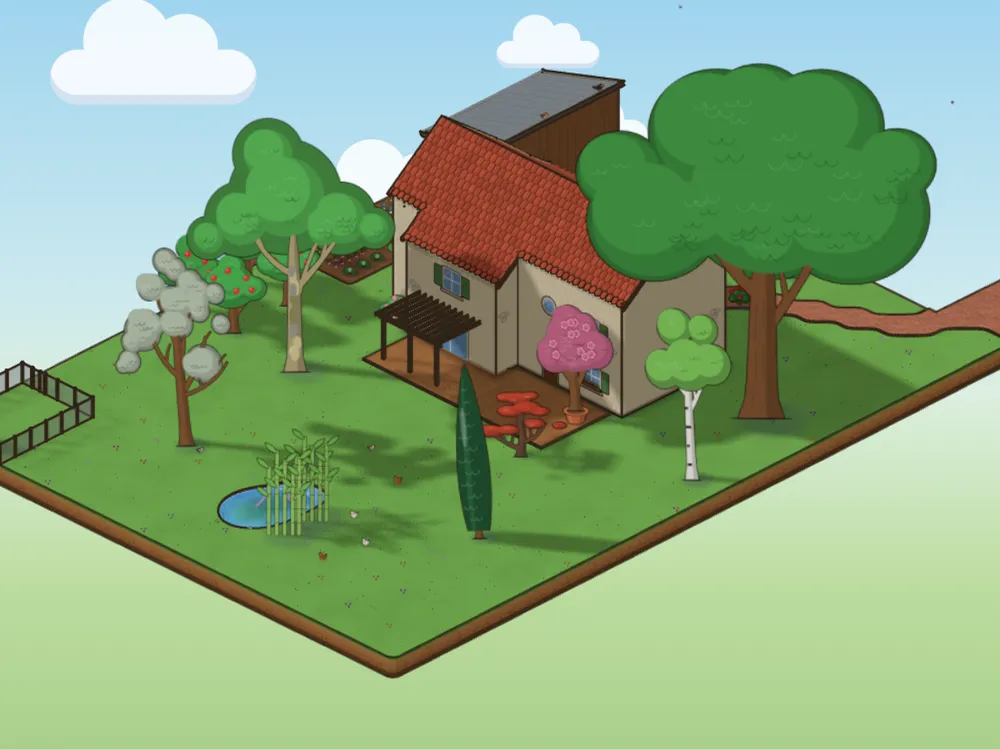
In Jardingo, one button grows the plants in your garden, from 1 to 20 years, each at its own pace. You see when the tree will shade the patio, and what will get too crowded: plants in each other’s way, one over the neighbour’s boundary, one touching a wall.
Questions
Which tree grows fastest?
Among the trees in our guides: black locust (2 m), Tasmanian blue gum (1.65 m) and goat willow (1.35 m) a year when young.
How much does an oak grow each year?
When young, an English oak gains about 30 cm a year, reaching 30 m when mature.
How long until a tree gives shade?
It depends on how fast it grows and how big it is when planted: at 60 cm a year, a young tree gains about 3 m in 5 years. In Jardingo, grow it by 5, 10 or 20 years and move the time forward to see where its shadow falls.
Where do these figures come from?
From nursery, botanic garden and forestry guides, read one by one. When a source gives a range, we take the middle. A species without a reliable figure is left out.